Showing posts with label worth reading. Show all posts

Monday, 20 July 2015

Angels-Servents of God: Interesting facts

An angel is a supernatural being or spirit found in various religions and mythologies. In Abrahamic religions and Zoroastrianism, angels are often depicted as benevolent celestial beings who act as intermediaries between God or Heaven and Earth, or as guardian spirits or a guiding influence. Other roles of angels include protecting and guiding human beings, and carrying out God's tasks.The term "angel" has also been expanded to various notions of spirits found in many other religious traditions. The theological study of angels is known as "angelology".

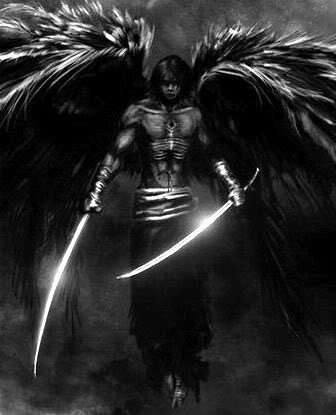
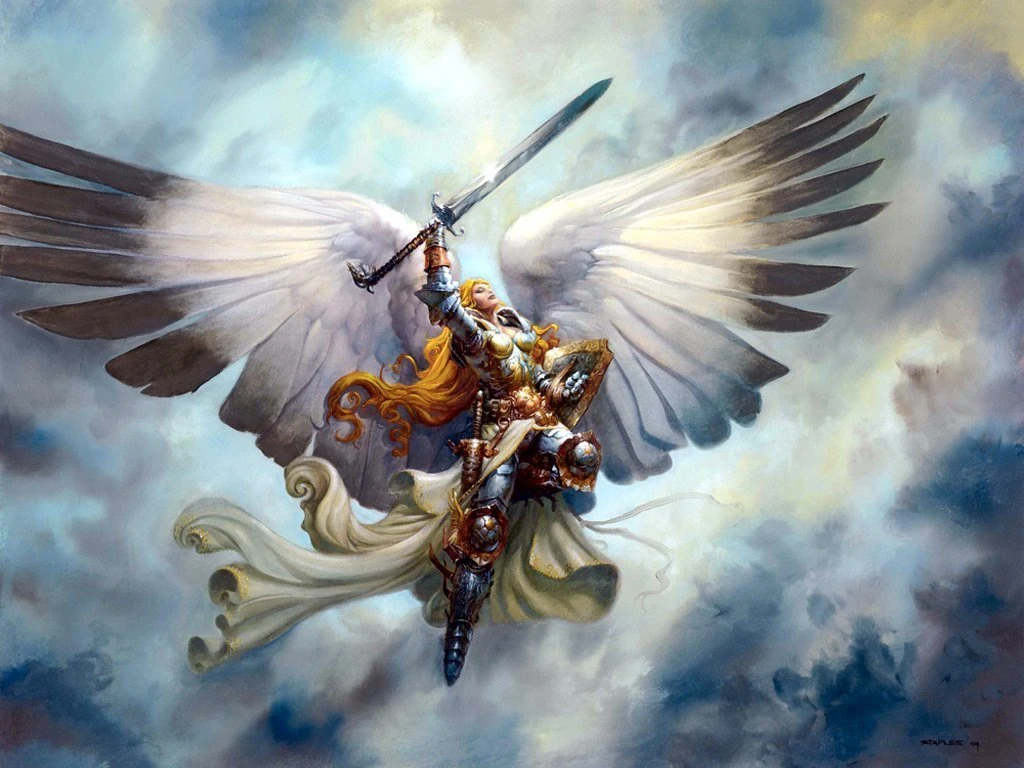
In art, angels are often depicted with bird-like wings on their back, a halo, robes and various forms of glowing light.


History of Angels:


The angels are two days and two nights older than we: the Lord created them on the fourth day, and from their high balcony between the recently invented sun and the first moon they scanned the infant earth, barely more than a few wheat fields and some orchards beside the waters. These primitive angels were stars. For the Hebrews, the concepts of angel and star merged effortlessly: I will select, from among many, the passage of the Book of Job (38:7) in which the Lord spoke out of the whirlwind and recalled the beginning of the world, "When the morning stars sang together, and all the sons of God shouted for joy." Quite apparently, these sons of God and singing stars are the same as the angels. Isaiah, too (14:12), calls the fallen angel "the morning star", a phrase Quevedo did not forget when he called him "lucero inobediente, ángel amotinado" [defiant star, rebel angel]. This equivalency between stars and angels (those populators of nighttime solitudes) strikes me as beautiful; it is among the distinctions of the Hebrews that they vitalized the astral bodies with souls, exalting their brilliance into life. 

From the beginning to the end, the Old Testament throngs with angels. There are ambiguous angels who come along the straight paths of the plain and whose superhuman nature cannot immediately be divined; there are angels brawny as farmhands, like the one who fought with Jacob a whole night until the breaking of the day; there are regimental angels, like the captain of the Lord's host who appeared to Joshua; there are angels who threaten cities and others who are like expert guides through solitude; the angels in God's engine of war number two thousand times a thousand. The best-equipped angelary, or arsenal of angels, is the Revelation of St. John: there are the strong angels, who cast out the dragon; those who stand at the four corners of the earth so that it does not blow away; those who gather up the clusters of the vine of the earth and cast them into the great winepress of the wrath of God; those who are implements of wrath; those who are bound in the great river Euphrates and let loose like tempests; those who are a mixture of eagle and man.

Islam, too, knows of angels. The Muslims of Cairo live blotted out by angels, the real world virtually deluged by the angelic, for according to Edward William Lane, each follower of the Prophet is assigned two guardian angels, or five, or sixty, or one hundred and sixty.

The Celestial Hierarchy, erroneously attributed to the Greek convert Dionysius and composed around the fifth century of our era, is a highly documented ranking of angelic order that distinguishes, for example, between the cherubim and the seraphim, allocating to the first the full, perfect, and overflowing vision of God and to the second an eternal ascension toward Him in a gesture both ecstatic and trembling, like a sudden blaze rushing upward. Twelve hundred years later, Alexander Pope, archetype of the learned poet, would recall this distinction when he penned his famous line: "As the rapt seraph, that adores and burns..."

Theologians, admirable in their intellectualism, did not shrink from angels and tried to penetrate this world of wings and mirages with their reasoning minds. This was no uncomplicated matter, for angels had to be defined as beings superior to man but necessarily inferior to divinity. The German speculative theologian Rothe records numerous examples of the push and pull of this dialectic. His list of angelic attributes include intellectual force; free will; immateriality (capable, however, of accidentally uniting itself with matter); aspatiality (neither taking up any space nor being enclosed by it); lasting duration, with a beginning but without end; invisibility, and even immutability, an attribute that harbors them in the eternal. As for the faculties they exercise, they are granted the utmost suppleness, the power of conversing amongst themselves instantaneously without words or signs, and that of working wonders, but not miracles. They cannot create from nothing or raise the dead. The angelic zone that lies halfway between God and man is, it would seem, highly regulated.

The Kabbalists also made use of angels. Dr. Erich Bischoff, in his German book entitled The Elements of the Kabbalah, published in Berlin in 1920, enumerates the ten sefiroth, or eternal emanations of divinity, and makes each correspond to one of the regions of the sky, one of the names of God, one of the Ten Commandments, one part of the human body, and one class of angels. Stehelin, in his Rabbinical Literature, links the first ten letters of the aleph-beth, or alphabet of the Hebrews, to these ten lofty worlds. Thus the letter aleph corresponds to the brain, the First Commandment, the sky of fire, the divine name "I Am That I Am," and the seraphim known as the Sacred Beasts. Those who accuse the Kabbalists of imprecision are clearly mistaken. They were, instead, fanatics of reason, and they delineated a world of deification by installments that was nevertheless as rigorous and causal as the one we feel now...

Such a swarm of angels cannot have avoided meddling in literature. The examples are inexhaustible. In the sonnet by Juan de Jáuregui to Ignatius Loyola, the angel retains his biblical strength, his combative seriousness:

Ved sobre el mar, porque su golfo encienda
El ángel fuerte, de pureza armado.
[Look to the sea, for its gulf is set aflame/by the strong angel, armed with purity]

For Luis de Góngora, the angel is a valuable decorative trinket, good for gratifying ladies and children:

¿Cuándo será aquel día que por yerro
oh, Serafin, desates, bien nacido,
Con manos de Cristal nudos de Hierro?
[When will the day be that in error/oh, Seraph, you unloose, well-born/Knots of Iron with your Crystalline hands?]

In a sonnet by Lope de Vega, I ran across the agreeable and very twentieth-century metaphor:

Cuelgan racimos de ángeles
[Clusters of angels dangle]

And these angels, with a whiff of the countryside about them, are from Juan Ramón Jiménez:

Vagos ángeles malvas
apagaban las verdes estrellas
[Vague angels, mauve as mallows,/were putting out the green stars]

Here we arrive at the near miracle that is the true motive for this writing: what we might call the survival of the angel. The human imagination has pictured a horde of monsters (tritons, hippogriffs, chimeras, sea serpents, unicorns, devils, dragons, werewolves, cyclopes, fauns, basilisks, demigods, leviathans, and a legion of others) and all have disappeared, except angels. Today, what line of poetry would dare allude to the phoenix or make itself the promenade of a centaur? None; but no poetry, however modern, is unhappy to be a nest of angels and to shine brightly with them. I always imagine them at nightfall, in the dusk of a slum or a vacant lot, in that long, quiet moment when things are gradually left alone, with their backs to the sunset, and when colors are like memories or premonitions of other colors. We must not be too prodigal with our angels; they are the last divinities we harbor, and they might fly away.

FACTS ABOUT ANGELS

  1. Angels are created and unlike the believer, they are not born of God. “Praise Him, all His angels, praise Him, all His Heavenly hosts... Let them praise the name of the Lord, for He commanded and they were created ” Psalm 148:1-5.
  2. The word ‘Angel’ is from the Greek ‘angelos’ which means messenger. Angels, therefore, carry messages from God.
  3. Angels are spirit beings. They are invisible but have the ability to manifest in the physical realm.
  4. Angels look like human beings and can appear as strangers (Genesis 19:1-3; Hebrews 13:2 which says: “Do not forget to entertain strangers, for by so doing some people have entertained angels without knowing it.”).
  5. Angels often manifest in dreams and visions. “One day at about three in the afternoon he had a vision. He distinctly saw an angel of God, who came to him and said, “Cornelius!” Acts 10:3 and Acts 27:23 “Last night an angel of the God whose I am and whom I serve stood beside me...”
  6. Angels are limited in their speech (Jude 9). They can only say what God has told them to say.
  7. Angels are always referred to as Masculine. There are no references in the Bible to angels of a feminine or child-like description.
  8. Angels are not Omnipotent (all powerful). Only God is.
  9. Angels are not Omnipresent (all present). Only God is.
  10. Angels are not Omniscient (all knowing) “It was revealed to them that they were not serving themselves but you, when they spoke of the things that have now been told you by those who have preached the Gospel to you by the Holy Spirit sent from Heaven. Even angels long to look into these things.” 1 Pet 1:12
  11. Angels are incapable of dying “... and they can no longer die; for they are like the angels...” Luke 20:36
  12. Angels do not rest (Rev 4:8)
  13. Angels work in the lives of both Christians and non-believers. Their purpose is ultimately to bring glory to God and they do this through helping people see God’s hand at work in their lives.
  14. Angels have a language distinct from any earthly language. Angels can, however, speak earthly language. “If I speak in the tongues of men and of angels, but have not love, I am only a resounding gong or a clanging cymbal..” 1 Cor 13:1
  15. Angels do not marry or reproduce (Luke 20:35-36; Matt 22:30).
  16. There are so many angels that they cannot be counted by human understanding (Heb 12:22; Rev 5:11)
  17. Angels travel between Heaven and earth in a split second (Ezek 1:14). Remember that there is no time or distance in the Spirit world.
  18. Angels are powerful beings, mighty in strength (2 Thess 1:7; Rev 10:1; 20:1-3). They are more powerful than satan and his cohorts.
  19. When angels speak we can receive their message as from God (Heb 2:2).Their words cannot be broken. “We must pay more careful attention...to what we have heard, so that we do not drift away. For if the message spoken by angels was binding, and every violation...received its just punishment...”
  20. Angels are not to be worshipped (Rev 22:8-9). They are our fellow servants.
  21. We will one day judge the fallen angels (1 Cor 6:3). 
Here is a documentary video that gives an account of History of Angels.


Astonishing FACTS about Facebook(MUST KNOW)

Facebook :

Facebook is an online social networking service headquartered in Menlo Park, California. Its website was launched on February 4, 2004, by Mark Zuckerberg with his Harvard College roommates and fellow students Eduardo Saverin, Andrew McCollum, Dustin Moskovitz and Chris Hughes. The founders had initially limited the website's membership to Harvard students, but later expanded it to colleges in the Boston area, the Ivy League, and Stanford University. It gradually added support for students at various other universities and later to high-school students. Since 2006, anyone who is at least 13 years old is allowed to become a registered user of the website, though the age requirement may be higher depending on applicable local laws. Its name comes from a colloquialism for the directory given to it by American universities' students.


After registering to use the site, users can create a user profile, add other users as "friends", exchange messages, post status updates and photos, share videos and receive notifications when others update their profiles. Additionally, users may join common-interest user groups, organized by workplace, school or college, or other characteristics, and categorize their friends into lists such as "People From Work" or "Close Friends". Facebook had over 1.44 billion monthly active users as of March 2015. Because of the large volume of data users submit to the service, Facebook has come under scrutiny for their privacy policies. Facebook, Inc. held its initial public offering in February 2012 and began selling stock to the public three months later, reaching an original peak market capitalization of $104 billion. On July 13, 2015, Facebook became the fastest company in the Standard & Poor’s 500 Index to reach a market cap of $250 billion.

Facts about Facebook :

  1. Facebook has over 350 million active users. More than 35 million users update their status each day, with more than 55 million status updates each day.
  2. More than 2.5 billion pictures are uploaded to Facebook each month.
  3. The average Facebook user has 130 friends and sends eight friend requests per month.
  4. Among children under 18, Facebook was ranked third in the top 100 searches of 2009, behind YouTube and Google. Sex and porn rounded out the top five searches.
  5. A recent survey of 500 top colleges found that 10% of admissions officers acknowledged looking at social networking sites such as Facebook to evaluate applicants. Thirty-eight percent of admissions officers said that what they saw negatively affected the applicant.
  6. Facebook is not only beating MySpace traffic, but it is also the second-ranked site overall in the U.S. behind Google.
  7. Americans spend 13.9 billion minutes a year on Facebook and five billion minutes on MySpace.
  8. In 2003, Harvard student Mark Zuckerberg created Facemash, where he placed photos of undergraduates side by side so viewers could rank which one was “hotter.” Zuckerberg would later turn Facemash into the now ubiquitous Facebook.
  9. legs in bed
    A woman slept with 50 men she met on her Facebook page titled “I Need Sex”
  10. In 2008, a 23-year-old woman named Lauren Michaels created a group titled “I Need Sex” on Facebook. Within 10 minutes, she had 35 members and soon attracted 100—50 of whom she eventually slept with. Facebook has since removed her page.
  11. An 18-year-old Wisconsin man posed as several different girls on Facebook to blackmail underage male teens into performing sexual favors by coaxing them to send nude photos of themselves. He could be facing up to 300 years in prison.
  12. Beacon, part of Facebook’s controversial advertisement system that broadcasted information about a user’s shopping activity on other sites, was the target of a class action lawsuit in 2009. The resulting settlement required Facebook to pay $9.5 million into a settlement fund.
  13. If Facebook were a country, it would be the fifth-largest country in the world, afterChina, India, the U.S., and Indonesia.
  14. In 2009, an EMT at the crime scene took a cell phone picture of the body of a New York woman who had been strangled and beaten and then posted it on his Facebook profile. He was later arrested on charges of official misconduct and was fired from his job.
  15. The head of the Catholic Church in England and Wales warned that Facebook and MySpace can lead children to commit suicide because such sites encourage teens to build transient relationships and dehumanize community life.
  16. Facebook includes eating disorder groups such as “Get Thin or Die Trying,” and “Quod me nutrit me destruit” (“What nourishes me destroys me”). While such eating disorder sites were typically anonymous on the Web, their growing presence on Facebook makes them more public and accessible to more people.h
  17. The New Oxford Dictionary announced that the 2009 Word of the Year was “unfriend,” as in “to remove someone as a friend on a social networking site” such as Facebook. However, there is some debate whether the word should be “defriend” rather than “unfriend.”l
  18. A 39-year-old Pennsylvania father was arrested for openly asking his 13-year-old daughter for sex over Facebook.
  19. While stressing that correlation does not equal causation, a recent poll suggested that Facebook users have lower overall grades than non-users.
  20. While initially created for college students, Facebook users over the age 26 now represent 60% of the total U.S. Facebook population.


  21. The average Facebook users spend more than 55 minutes a day on the site. They use the Like button nine times a month and write 25 comments each month.

Life Style of Mark Zukerberg :

Being the youngest billionare, any aspiring programmer would take Zuckerberg as an Inspiration. Wanna know the lifestyle of Zuck, view the video,


Sunday, 19 July 2015

10 Rules to have an AMAZING day :)

Everyone want to live a happy life. Everyday counts .Start each day expecting something amazing is going to happen. Here is 10 simple rules to make your day amazing.

1. TODAY I WILL NOT STRIKE BACK:

  If someone is rude, if someone is impatient, if someone is unkind...
  I will not respond in a like manner.  
   

2. TODAY I WILL ASK GOD TO BLESS MY "ENEMY":

  If I come across someone who treats me harshly or unfairly, I will
  quietly ask God to bless that individual. I understand the "enemy"
  could be a family member, neighbor, co-worker, or a stranger.  
   

3. TODAY I WILL BE CAREFUL ABOUT WHAT I SAY:

  I will carefully choose and guard my words being certain that I do
  not spread gossip.  
   

4. TODAY I WILL GO THE EXTRA MILE:

  I will find ways to help share the burden of another person.  
   

5. TODAY I WILL FORGIVE:

  I will forgive any hurts or injuries that come my way.  
   

6. TODAY I WILL DO SOMETHING NICE FOR SOMEONE,

  BUT I WILL NOT DO IT SECRETLY:

  I will reach out anonymously and bless the life of another.  
   

7. TODAY I WILL TREAT OTHERS THE WAY I WISH TO BE

  TREATED:

  I will practice the golden rule - "Do unto others as I would have
  them do unto me" - with everyone I encounter.  
   

8. TODAY I WILL RAISE THE SPIRITS OF SOMEONE I

  DISCOURAGED:

  My smile, my words, my ex-pression of support, can make the
  difference to someone who is wrestling life.  
   

9. TODAY I WILL NUTURE MY BODY:

  I will eat less; I will eat only healthy foods. I will thank God for my
  body.  
   

10. TODAY I WILL GROW SPIRITUALLUY:

  I will spend a little more time in prayer today: I will begin reading
  something spiritual or inspirational today; I will find a quiet place
  (at some point during the day) and listen to God's voice!    


Dreams:A new perspective- Premonitions

What do you mean by ‘Premonitions’?

Premonition(Precognition) (from the Latin præ-, “before” and cognitio, “acquiring knowledge”), also called future sight, and second sight, is an alleged psychic ability to see events in the future.This may range from insight into a insignificant event to the death of an individual.As with other forms of extrasensory, there is no evidence that precognition is a real ability possessed by anyone. But it can’t be proved nil. There are awful amount of people conveying the message there is a way of knowing the future through our own psychological mind.
out-of-bodySo how can you possibly distinguish precognitive dream from a normal dream?
Here is the list of what a precognitive dreams can have.

Highly symbolic:

These dreams are highly symbolic. They can’t be understood easily. The meaning can go into various realm. Those dreams can be interpreted wrongly, which might indeed cause trouble to you indirectly. If you can’t understand, it is always better to get rid of it than to falsely interpret.

They never dilute from memory:

The main characteristic of these dreams is that they never vanish from your memories. It will remain in your memory for even decades. You may even wonder how you possibly forget the things that you experience in your life but not the dream. If they are pleasant you may be expecting it to happen. If not, you may feel tired of the dream.

It will surely happen:

These dreams surely come to pass. It may take a day, a year or even a decade. But it will surely happen. May be you can even not able to change it. It is something that can’t be change even though you know before hand what is going to happen. You may not have the control over the thing that happen in your life.

Self-Inducing:

Premonitions are future information that knowing it before hand may trigger its actual happening. It may induce thoughts you may never had been thinking before. Those thought become action and action become destination. They can be encouraging or terribly discouraging. So, don’t go for a dream without knowing it’s meaning.

Highly Intense:

Sometimes premonitions are highly intense. Highly intense I mean that it can be accurate to the highest possibility to the level you may think that you actually been there or as if actually happened. You may even forget your present for a while because you had a premonition.
I my opinion, precognitive dreams are responsible for dejavu.


Funny Phobias- a list(Must Know) -Very Funny


Funny Phobias

Most of the people in the world have a fear of one kind or another.  While most
people suffer from pathophobia (fear of disease), monophobia (fear of being alone),
glossophobia (fear of public speaking), algophobia (fear of pain), taphephobia (fear of
being buried alive), and many more, there are also some less popular phobias.  At the end
of this essay, I have compiled a list of the phobias that I find amusing.

    There are many people in the world that suffer from polyphobia, which simply
means to have more than one fear.  Not so common, people may suffer from antinomial
phobias. For example, there are some people that live with vestiophobia (fear of clothes) . Another example is people with achluophobia (fear of darkness) and photophobia (fear of light).

    Watch out guys, within the next seven years, you will probably get married and
you will suffer from pentheraphobia, which is one of the scariest phobias in existence, the
fear of your mother-in-law!


Not all phobias have been in existence for thousands of years.  I’m sure that
brontophobia (fear of thunder and lightning), febriphobia (fear of fever), and
ophidiophobia (fear of snakes) have existed since the Black Ages.  Some of the phobias
that have formed in the last two centuries would be electrophobia (fear of electricity),
motorphobia (fear of automobiles), and aviophobia (fear of flying).  In 1945, a brand new
phobia was quickly created and escalated drastically in the 1950’s.  It is called
nucleomituphobia, which is the fear or nuclear weapons.  But that’s not the newest phobia
in existence as of today.  This threat is called cyberphobia (fear of computers).  In mild
cases, people may be afraid to use a computer or an ATM.  In today’s society, technology
is deeply integrated.  Computers are used in calculators, cars, microwaves, power tools,
and many more.  So to the cyberphobic, I say, “Get over it, or go to the extreme and
move away from the city, abandon your car, hand build your home, hand pump your
water, build your fires, and hunt for your own food!”

    If you have a phobia, there is still hope for you.  Phobias can be cured.  Remember
when you were a child and suffered from clinophobia (fear of going to bed) because of
bogyphobia (fear of the bogeyman), achluophobia (fear of darkness), and lachanophobia
(fear of vegetables).  Now chances are good that you go to bed without checking your
closet or looking under your bed, that you don’t go ballistic if the lights go out, and that
you eat a salad every so often.


 Phobias can deeply impact a person’s life.  A person with chronophobia (fear of
time) probably won’t make it to their 10:00AM dentist appointment on time.  A person
with chaetophobia (fear of hair) is most likely bald, has no eyelashes, no eyebrows, etc.  A
person with cibophobia (fear of food) usually hasn’t eaten in weeks and could easily be
anorexic.  This proves how serious and destructive phobias can be.  If you do suffer from
any strange phobias, I would suggest calling one-eight-hundred-phobias, for
arithmophobics (people who fear numbers) or for logophobics (people who fear words),
1-800-635-1317.   This phone number is for entertainment purposes only.
    Now on a more serious note, in all the years I’ve lived and all the knowledge I’ve
acquired, I can only find one, yes one, valid fear.  This fear is called zeusophobia, which is
the fear of God.  In Heaven, the false phobias are destroyed, but in Hell they can be
amplified.
    I still find it hilarious, though, that these phobias exist, especially since someone
must have experienced these fears so they could be valid phobias.  So if you experience
arachibutyrophobia, you’re probably one in a million, but you’re still out there.
some fears may be listed more than once

Letter-A
Ablutophobia- Fear of washing or bathing
Aerophobia- Fear of swallowing air
Ambulophobia- Fear of walking
Anablephobia- Fear of looking up
Anemophobia- Fear of wind
Anthrophobia- Fear of flowers
Arachibutyrophobia- Fear of peanut butter sticking to the roof of the mouth.
Arithmophobia- Fear of numbers
Aulophobia- Fear of flutes
Auroraphobia- Fear of Northern Lights
Letter-B
Barophobia- Fear of gravity
Basophobia- Fear of walking
Batophobia- Fear of being close to high buildings
Bibliophobia- Fear of books
Blennophobia- Fear of slime
Bogyphobia- Fear of the bogeyman
Letter-C
Cathisophobia- Fear of sitting
Catoptrophobia- Fear of mirrors
Chaetophobia- Fear of hair
Chionophobia- Fear of snow
Chromatophobia- Fear of colors
Chronophobia- Fear of time
Chronomentrophobia- Fear of clocks
Cibophobia- Fear of food
Clinophobia- Fear of going to bed
Cnidophobia- Fear of string
Letter-D
Deciophobia- Fear of making decisions
Dendrophobia- Fear of trees
Dextrophobia- Fear of objects at the right side of the body
Didaskaleinophobia- Fear of school
Letter-E
Eisoptrophobia- Fear of mirrors
Eleutherophobia- Fear of freedom
Eosophobia- Fear of daylight
Epistemophobia- Fear of knowledge
Ergophobia- Fear of work
Ereuthophobia- Fear of the color red
Letter-G
Geliophobia- Fear of laughter
Geniophobia- Fear of chins
Genuphobia- Fear of knees
Geumaphobia- Fear of taste
Gnosiophobia- Fear of knowledge
Graphophobia- Fear of writing
Letter-H
Heliophobia- Fear of the sun
Helmintophobia- Fear of being infested with worms
Hemophobia- Fear of blood
Hippopotomonstrosesquippedaliophobia- Fear of long words
Homichlophobia- Fear of fog
Hypnophobia- Fear of sleep
Letter-I
Ichthyophobia- Fear of fish
Ideophobia- Fear of ideas
Letter-K
Kainophobia- Fear of anything new
Kathisophobia- Fear of sitting down
Letter-L
Lachanophobia- Fear of vegetables
Leukophobia- Fear of the color white
Levophobia- Fear of objects to the left side of the body
Linonophobia- Fear of string
Logophobia- Fear of words
Letter-M
Melanophobia- Fear of the color black
Melophobia- Fear of music
Metrophobia- Fear of poetry
Mnemophobia- Fear of memories
Mottephobia- Fear of moths
Letter-N
Nebulaphobia- Fear of fog
Neophobia- Fear of anything new
Nephophobia- Fear of clouds
Nomatophobia- Fear of names
Letter-O
Octophobia- Fear of the number 8
Ommetaphobia- Fear of eyes
Oneirophobia- Fear of dreams
Ophthalmophobia- Fear of opening one’s eyes
Ostraconophobia- Fear of shellfish
Letter-P
Panophobia- Fear of everything
Papyrophobia- Fear of paper
Paraskavedekatriaphobia- Fear of Friday the 13th
Peladophobia- Fear of bald people
Phengophobia- Fear of daylight
Phobophobia- Fear of fear
Photophobia- Fear of light
Phronemophobia- Fear of thinking
Pogonophobia- Fear of beards
Letter-S
Sciophobia- Fear of shadows
Scolionophobia- Fear of school
Selenophobia- Fear of the moon
Siderophobia- Fear of stars
Sitophobia- Fear of food
Sophophobia- Fear of learning
Stasibasiphobia- Fear of walking
Letter-T
Thaasophobia- Fear of sitting
Trichopathophobia- Fear of hair
Triskadekaphobia- Fear of the number 13
Letter-V
Verbophobia- Fear of words
Letter-X
Xanthophobia- Fear of the color yellow