Showing posts with label facts. Show all posts

Tuesday, 21 July 2015

Top 10 Cool Social Networks probably you should be using

In this 21st Century, with the ever-increasing internet population, almost all are using the social networks to some extent. How would you possibly share an information that propagates through masses? Social network proves to be most useful for the widespread of information. The sites introduce cool tactics that improve user experience allowing them to stay connects and making their life comfortable. It is easy to promote a product or service in a social network with the expense of few bucks. Here is the short roundup of top 10 sites that proves to be competent to gather the attention of millions of people available in various platforms.
“Do you wanna know about the calm cute girl in your class?”, use Facebook. Trust me it is much faster than any attempts you could make in the class. Facebook is a giant online social network whose population is ever on the increase almost all the departments are using Facebook for their own needs. Facebook is a cool site to socialize with people and they made themselves available in multiple platforms so that you could use it anywhere and anytime. On the whole it gets ranked 2 by Alexa Rank of sites with unique visitors of 900million in number.


Like Facebook, Twitter is also popular and is more suitable for mobile users.For a microblogging site with a 140-character text limit, Twitter sure has made its mark online .Its an ideal platform for mobile users, and Twitter Card integration make it easy to share all sorts of multimedia content in tweets . Moreover, most of the celebrities are in Twitter and they get a chance to interact with their fans.


It is said that it takes 1700years for one to watch all the videos of Youtube. Such a giant video site provides essentially all kind of videos including tutorials, new updates,documentaries, movies and a lot more. They have designed it in such a way that sharing of videos have become much easier. Anyone can expertise a skill through the videos, or what so ever enjoy the holiday and pass the time.


Anyone who needs to boost their career through various professional contacts can make use of LinkedIn. It is known as a social network for career. Individuals can make contact with other professionals, can post job ads or apply for jobs and so on.

Instagram has grown to be one of the most popular photo sharing social network in the mobile platform. People could upload their wonderful moments in their life and share it with their friends. It is the ultimate social network for sharing real time photos and short videos.
  

Having its debut in the summer of 2011, it is the fastest growing social network web has ever seen. It has compelling options that draws people to get excited about using. It promotes other google products through the site. It also associates hangouts with it for chat application. It was expected to be the main rival of Facebook. And so Facebook changed their design to stay as the coolest site of the web. 

Pinterest is quickly becoming a major player in social networking, and proves just how important visual content has become on he web. As the fastest standalone site ever to reach 10 million monthly unique visits, Pinterest's beautiful and intuitive pinboard-style platform on the web and on mobile is one of the most incredible resources for collecting the best images and categorizing them on your own boards.


Tumblr is an extremely popular social blogging platform heavily used by teens and younger users. Like Pinterest, it's popular for sharing visual content. You can customize your blog theme, post all different tpes of content formats, follow other users and be followed back. Reblogging and “liking” is a popular way to interact. If you post great content, you might be surprised to see how many followers you can attract.


Vine is mobile video-sharing app owned by Twitter. One of the most convenient things about Vine is that its videos can be directly embedded inline on Twitter when shared through a tweet -- or even embedded on a website. Videos play on autoloop and are limited to a maximum of six seconds, but that doesn't stop it from being such a powerful social network. Many prefer it over Instagram video.


Snapchat is a social network based on instant messaging, and it's totally mobile-based. It's one of the fastest growing apps out there, building its popularity on the idea of self-destructing "snaps" -- photos or short videos you take to chat with friends before they automatically delete after viewing. It's a massive social app for kids. If you're unfamiliar, check out this step-by-step tutorial on how to use Snapchat.



Monday, 20 July 2015

Angels-Servents of God: Interesting facts

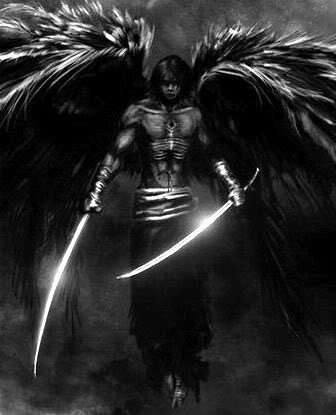
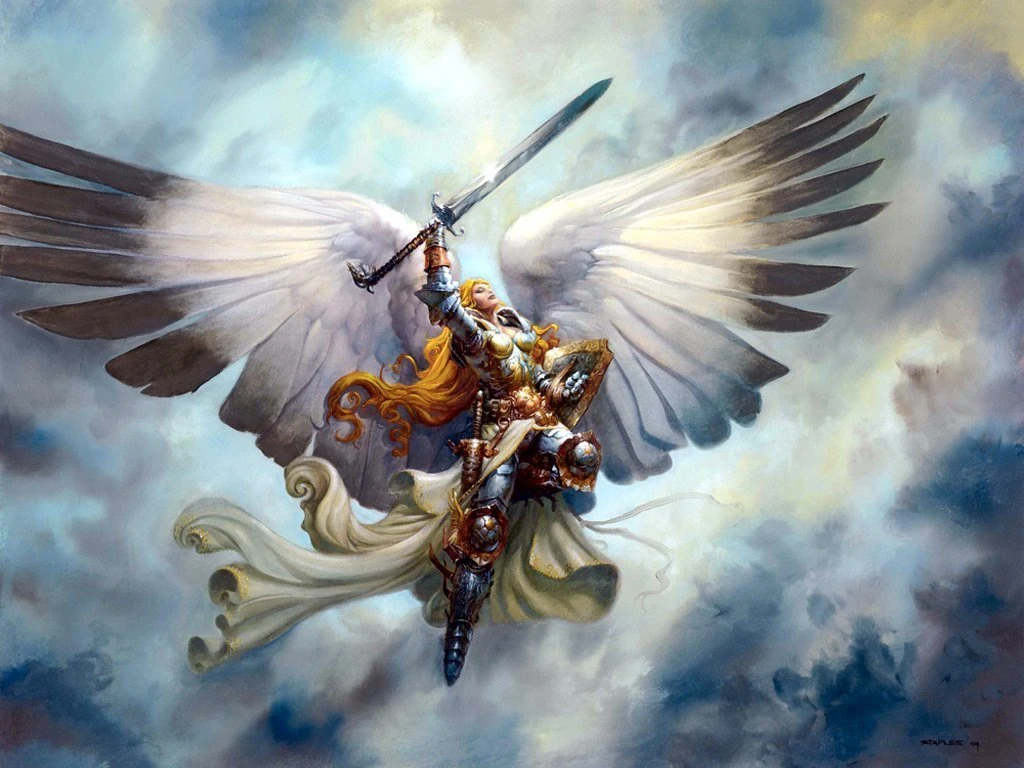
An angel is a supernatural being or spirit found in various religions and mythologies. In Abrahamic religions and Zoroastrianism, angels are often depicted as benevolent celestial beings who act as intermediaries between God or Heaven and Earth, or as guardian spirits or a guiding influence. Other roles of angels include protecting and guiding human beings, and carrying out God's tasks.The term "angel" has also been expanded to various notions of spirits found in many other religious traditions. The theological study of angels is known as "angelology".

In art, angels are often depicted with bird-like wings on their back, a halo, robes and various forms of glowing light.


History of Angels:


The angels are two days and two nights older than we: the Lord created them on the fourth day, and from their high balcony between the recently invented sun and the first moon they scanned the infant earth, barely more than a few wheat fields and some orchards beside the waters. These primitive angels were stars. For the Hebrews, the concepts of angel and star merged effortlessly: I will select, from among many, the passage of the Book of Job (38:7) in which the Lord spoke out of the whirlwind and recalled the beginning of the world, "When the morning stars sang together, and all the sons of God shouted for joy." Quite apparently, these sons of God and singing stars are the same as the angels. Isaiah, too (14:12), calls the fallen angel "the morning star", a phrase Quevedo did not forget when he called him "lucero inobediente, ángel amotinado" [defiant star, rebel angel]. This equivalency between stars and angels (those populators of nighttime solitudes) strikes me as beautiful; it is among the distinctions of the Hebrews that they vitalized the astral bodies with souls, exalting their brilliance into life. 

From the beginning to the end, the Old Testament throngs with angels. There are ambiguous angels who come along the straight paths of the plain and whose superhuman nature cannot immediately be divined; there are angels brawny as farmhands, like the one who fought with Jacob a whole night until the breaking of the day; there are regimental angels, like the captain of the Lord's host who appeared to Joshua; there are angels who threaten cities and others who are like expert guides through solitude; the angels in God's engine of war number two thousand times a thousand. The best-equipped angelary, or arsenal of angels, is the Revelation of St. John: there are the strong angels, who cast out the dragon; those who stand at the four corners of the earth so that it does not blow away; those who gather up the clusters of the vine of the earth and cast them into the great winepress of the wrath of God; those who are implements of wrath; those who are bound in the great river Euphrates and let loose like tempests; those who are a mixture of eagle and man.

Islam, too, knows of angels. The Muslims of Cairo live blotted out by angels, the real world virtually deluged by the angelic, for according to Edward William Lane, each follower of the Prophet is assigned two guardian angels, or five, or sixty, or one hundred and sixty.

The Celestial Hierarchy, erroneously attributed to the Greek convert Dionysius and composed around the fifth century of our era, is a highly documented ranking of angelic order that distinguishes, for example, between the cherubim and the seraphim, allocating to the first the full, perfect, and overflowing vision of God and to the second an eternal ascension toward Him in a gesture both ecstatic and trembling, like a sudden blaze rushing upward. Twelve hundred years later, Alexander Pope, archetype of the learned poet, would recall this distinction when he penned his famous line: "As the rapt seraph, that adores and burns..."

Theologians, admirable in their intellectualism, did not shrink from angels and tried to penetrate this world of wings and mirages with their reasoning minds. This was no uncomplicated matter, for angels had to be defined as beings superior to man but necessarily inferior to divinity. The German speculative theologian Rothe records numerous examples of the push and pull of this dialectic. His list of angelic attributes include intellectual force; free will; immateriality (capable, however, of accidentally uniting itself with matter); aspatiality (neither taking up any space nor being enclosed by it); lasting duration, with a beginning but without end; invisibility, and even immutability, an attribute that harbors them in the eternal. As for the faculties they exercise, they are granted the utmost suppleness, the power of conversing amongst themselves instantaneously without words or signs, and that of working wonders, but not miracles. They cannot create from nothing or raise the dead. The angelic zone that lies halfway between God and man is, it would seem, highly regulated.

The Kabbalists also made use of angels. Dr. Erich Bischoff, in his German book entitled The Elements of the Kabbalah, published in Berlin in 1920, enumerates the ten sefiroth, or eternal emanations of divinity, and makes each correspond to one of the regions of the sky, one of the names of God, one of the Ten Commandments, one part of the human body, and one class of angels. Stehelin, in his Rabbinical Literature, links the first ten letters of the aleph-beth, or alphabet of the Hebrews, to these ten lofty worlds. Thus the letter aleph corresponds to the brain, the First Commandment, the sky of fire, the divine name "I Am That I Am," and the seraphim known as the Sacred Beasts. Those who accuse the Kabbalists of imprecision are clearly mistaken. They were, instead, fanatics of reason, and they delineated a world of deification by installments that was nevertheless as rigorous and causal as the one we feel now...

Such a swarm of angels cannot have avoided meddling in literature. The examples are inexhaustible. In the sonnet by Juan de Jáuregui to Ignatius Loyola, the angel retains his biblical strength, his combative seriousness:

Ved sobre el mar, porque su golfo encienda
El ángel fuerte, de pureza armado.
[Look to the sea, for its gulf is set aflame/by the strong angel, armed with purity]

For Luis de Góngora, the angel is a valuable decorative trinket, good for gratifying ladies and children:

¿Cuándo será aquel día que por yerro
oh, Serafin, desates, bien nacido,
Con manos de Cristal nudos de Hierro?
[When will the day be that in error/oh, Seraph, you unloose, well-born/Knots of Iron with your Crystalline hands?]

In a sonnet by Lope de Vega, I ran across the agreeable and very twentieth-century metaphor:

Cuelgan racimos de ángeles
[Clusters of angels dangle]

And these angels, with a whiff of the countryside about them, are from Juan Ramón Jiménez:

Vagos ángeles malvas
apagaban las verdes estrellas
[Vague angels, mauve as mallows,/were putting out the green stars]

Here we arrive at the near miracle that is the true motive for this writing: what we might call the survival of the angel. The human imagination has pictured a horde of monsters (tritons, hippogriffs, chimeras, sea serpents, unicorns, devils, dragons, werewolves, cyclopes, fauns, basilisks, demigods, leviathans, and a legion of others) and all have disappeared, except angels. Today, what line of poetry would dare allude to the phoenix or make itself the promenade of a centaur? None; but no poetry, however modern, is unhappy to be a nest of angels and to shine brightly with them. I always imagine them at nightfall, in the dusk of a slum or a vacant lot, in that long, quiet moment when things are gradually left alone, with their backs to the sunset, and when colors are like memories or premonitions of other colors. We must not be too prodigal with our angels; they are the last divinities we harbor, and they might fly away.

FACTS ABOUT ANGELS

  1. Angels are created and unlike the believer, they are not born of God. “Praise Him, all His angels, praise Him, all His Heavenly hosts... Let them praise the name of the Lord, for He commanded and they were created ” Psalm 148:1-5.
  2. The word ‘Angel’ is from the Greek ‘angelos’ which means messenger. Angels, therefore, carry messages from God.
  3. Angels are spirit beings. They are invisible but have the ability to manifest in the physical realm.
  4. Angels look like human beings and can appear as strangers (Genesis 19:1-3; Hebrews 13:2 which says: “Do not forget to entertain strangers, for by so doing some people have entertained angels without knowing it.”).
  5. Angels often manifest in dreams and visions. “One day at about three in the afternoon he had a vision. He distinctly saw an angel of God, who came to him and said, “Cornelius!” Acts 10:3 and Acts 27:23 “Last night an angel of the God whose I am and whom I serve stood beside me...”
  6. Angels are limited in their speech (Jude 9). They can only say what God has told them to say.
  7. Angels are always referred to as Masculine. There are no references in the Bible to angels of a feminine or child-like description.
  8. Angels are not Omnipotent (all powerful). Only God is.
  9. Angels are not Omnipresent (all present). Only God is.
  10. Angels are not Omniscient (all knowing) “It was revealed to them that they were not serving themselves but you, when they spoke of the things that have now been told you by those who have preached the Gospel to you by the Holy Spirit sent from Heaven. Even angels long to look into these things.” 1 Pet 1:12
  11. Angels are incapable of dying “... and they can no longer die; for they are like the angels...” Luke 20:36
  12. Angels do not rest (Rev 4:8)
  13. Angels work in the lives of both Christians and non-believers. Their purpose is ultimately to bring glory to God and they do this through helping people see God’s hand at work in their lives.
  14. Angels have a language distinct from any earthly language. Angels can, however, speak earthly language. “If I speak in the tongues of men and of angels, but have not love, I am only a resounding gong or a clanging cymbal..” 1 Cor 13:1
  15. Angels do not marry or reproduce (Luke 20:35-36; Matt 22:30).
  16. There are so many angels that they cannot be counted by human understanding (Heb 12:22; Rev 5:11)
  17. Angels travel between Heaven and earth in a split second (Ezek 1:14). Remember that there is no time or distance in the Spirit world.
  18. Angels are powerful beings, mighty in strength (2 Thess 1:7; Rev 10:1; 20:1-3). They are more powerful than satan and his cohorts.
  19. When angels speak we can receive their message as from God (Heb 2:2).Their words cannot be broken. “We must pay more careful attention...to what we have heard, so that we do not drift away. For if the message spoken by angels was binding, and every violation...received its just punishment...”
  20. Angels are not to be worshipped (Rev 22:8-9). They are our fellow servants.
  21. We will one day judge the fallen angels (1 Cor 6:3). 
Here is a documentary video that gives an account of History of Angels.


Astonishing FACTS about Facebook(MUST KNOW)

Facebook :

Facebook is an online social networking service headquartered in Menlo Park, California. Its website was launched on February 4, 2004, by Mark Zuckerberg with his Harvard College roommates and fellow students Eduardo Saverin, Andrew McCollum, Dustin Moskovitz and Chris Hughes. The founders had initially limited the website's membership to Harvard students, but later expanded it to colleges in the Boston area, the Ivy League, and Stanford University. It gradually added support for students at various other universities and later to high-school students. Since 2006, anyone who is at least 13 years old is allowed to become a registered user of the website, though the age requirement may be higher depending on applicable local laws. Its name comes from a colloquialism for the directory given to it by American universities' students.


After registering to use the site, users can create a user profile, add other users as "friends", exchange messages, post status updates and photos, share videos and receive notifications when others update their profiles. Additionally, users may join common-interest user groups, organized by workplace, school or college, or other characteristics, and categorize their friends into lists such as "People From Work" or "Close Friends". Facebook had over 1.44 billion monthly active users as of March 2015. Because of the large volume of data users submit to the service, Facebook has come under scrutiny for their privacy policies. Facebook, Inc. held its initial public offering in February 2012 and began selling stock to the public three months later, reaching an original peak market capitalization of $104 billion. On July 13, 2015, Facebook became the fastest company in the Standard & Poor’s 500 Index to reach a market cap of $250 billion.

Facts about Facebook :

  1. Facebook has over 350 million active users. More than 35 million users update their status each day, with more than 55 million status updates each day.
  2. More than 2.5 billion pictures are uploaded to Facebook each month.
  3. The average Facebook user has 130 friends and sends eight friend requests per month.
  4. Among children under 18, Facebook was ranked third in the top 100 searches of 2009, behind YouTube and Google. Sex and porn rounded out the top five searches.
  5. A recent survey of 500 top colleges found that 10% of admissions officers acknowledged looking at social networking sites such as Facebook to evaluate applicants. Thirty-eight percent of admissions officers said that what they saw negatively affected the applicant.
  6. Facebook is not only beating MySpace traffic, but it is also the second-ranked site overall in the U.S. behind Google.
  7. Americans spend 13.9 billion minutes a year on Facebook and five billion minutes on MySpace.
  8. In 2003, Harvard student Mark Zuckerberg created Facemash, where he placed photos of undergraduates side by side so viewers could rank which one was “hotter.” Zuckerberg would later turn Facemash into the now ubiquitous Facebook.
  9. legs in bed
    A woman slept with 50 men she met on her Facebook page titled “I Need Sex”
  10. In 2008, a 23-year-old woman named Lauren Michaels created a group titled “I Need Sex” on Facebook. Within 10 minutes, she had 35 members and soon attracted 100—50 of whom she eventually slept with. Facebook has since removed her page.
  11. An 18-year-old Wisconsin man posed as several different girls on Facebook to blackmail underage male teens into performing sexual favors by coaxing them to send nude photos of themselves. He could be facing up to 300 years in prison.
  12. Beacon, part of Facebook’s controversial advertisement system that broadcasted information about a user’s shopping activity on other sites, was the target of a class action lawsuit in 2009. The resulting settlement required Facebook to pay $9.5 million into a settlement fund.
  13. If Facebook were a country, it would be the fifth-largest country in the world, afterChina, India, the U.S., and Indonesia.
  14. In 2009, an EMT at the crime scene took a cell phone picture of the body of a New York woman who had been strangled and beaten and then posted it on his Facebook profile. He was later arrested on charges of official misconduct and was fired from his job.
  15. The head of the Catholic Church in England and Wales warned that Facebook and MySpace can lead children to commit suicide because such sites encourage teens to build transient relationships and dehumanize community life.
  16. Facebook includes eating disorder groups such as “Get Thin or Die Trying,” and “Quod me nutrit me destruit” (“What nourishes me destroys me”). While such eating disorder sites were typically anonymous on the Web, their growing presence on Facebook makes them more public and accessible to more people.h
  17. The New Oxford Dictionary announced that the 2009 Word of the Year was “unfriend,” as in “to remove someone as a friend on a social networking site” such as Facebook. However, there is some debate whether the word should be “defriend” rather than “unfriend.”l
  18. A 39-year-old Pennsylvania father was arrested for openly asking his 13-year-old daughter for sex over Facebook.
  19. While stressing that correlation does not equal causation, a recent poll suggested that Facebook users have lower overall grades than non-users.
  20. While initially created for college students, Facebook users over the age 26 now represent 60% of the total U.S. Facebook population.


  21. The average Facebook users spend more than 55 minutes a day on the site. They use the Like button nine times a month and write 25 comments each month.

Life Style of Mark Zukerberg :

Being the youngest billionare, any aspiring programmer would take Zuckerberg as an Inspiration. Wanna know the lifestyle of Zuck, view the video,


Hell is REAL (Believe it or not) Must Know-Fate of Humans


What is Hell? What for it is created?

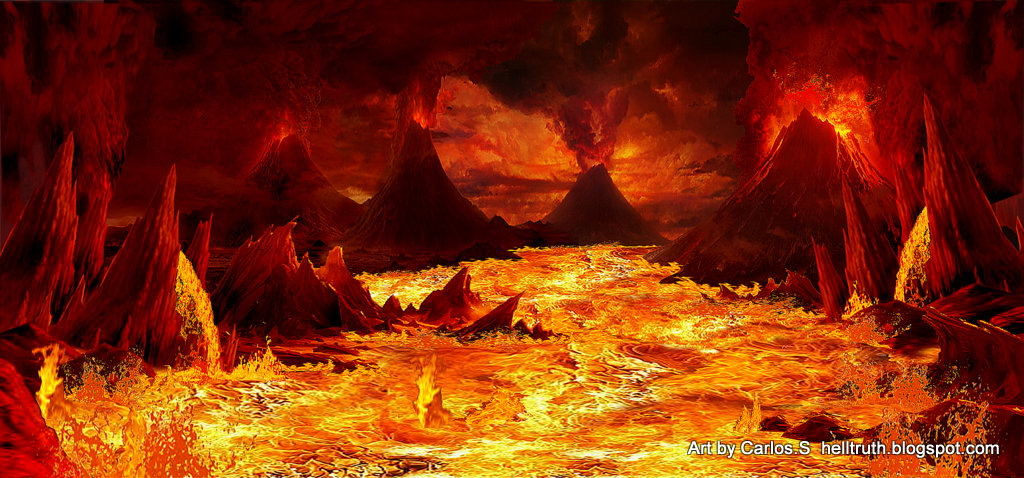
Hell is a place of suffering originally prepared by God for the devil and his angels (Matthew 18:9;25:41). The wordsHades(Greek) andSheol(Hebrew) are sometimes associated with hell. However,Hades/Sheolis simply the place or realm where the spirits of people go when they die (Genesis 37:35). Hades/Sheol is not necessarily a place of torment because God’s people were said to go there as well as the wicked. In the New Testament, we find that Hades is somehow “compartmentalized.” That is, the realm of the dead is divided into a place of comfort and a place of torment (Luke 16:19–31).


There are other words associated with hell in the Bible such asGehennaandlake of fire. It is clear that there is an actual place where the spirits of the unsaved go for eternity (Revelation 9:1;20:15;Matthew 23:33).

Everything that ever was or is or will be is created by God, including hell (Colossians 1:16).John 1:3says, “All things were made through him, and without him was not anything made that was made.” God alone has the power to cast someone into hell (Luke 12:5). Jesus holds thekeys of deathand Hades (Revelation 1:18).


Jesus said that hell was “prepared” for Satan and the demons (Matthew 25:41). It is a just punishment for the wicked one. Hell, or the lake of fire, will also be the destination for those who reject Christ (2 Peter 2:4–9). The good news is that people can avoid hell. God, in His infinite mercy and love, has made a way of salvation for everyone who trusts in God’s Son, Jesus Christ (John 3:16,36;5:24).

Is hell real? Is hell eternal?

It is interesting that a much higher percentage of people believe in the existence of heaven than believe in the existence of hell. According to the Bible, though, hell is just as real as heaven. The Bible clearly and explicitly teaches that hell is a real place to which the wicked/unbelieving are sent after death. We have all sinned against God (Romans 3:23). The just punishment for that sin is death (Romans 6:23). Since all of our sin is ultimately against God (Psalm 51:4), and since God is an infinite and eternal Being, the punishment for sin, death, must also be infinite and eternal. Hell is this infinite and eternal death which we have earned because of our sin.


The punishment of the wicked dead in hell is described throughout Scripture as “eternal fire” (Matthew 25:41), “unquenchable fire” (Matthew 3:12), “shame and everlasting contempt” (Daniel 12:2), a place where “the fire is not quenched” (Mark 9:44-49), a place of “torment” and “fire” (Luke 16:23-24), “everlasting destruction” (2 Thessalonians 1:9), a place where “the smoke of torment rises forever and ever” (Revelation 14:10-11), and a “lake of burning sulfur” where the wicked are “tormented day and night forever and ever” (Revelation 20:10).

The punishment of the wicked in hell is as never ending as the bliss of the righteous in heaven. Jesus Himself indicates that punishment in hell is just as everlasting as life in heaven (Matthew 25:46). The wicked are forever subject to the fury and the wrath of God. Those in hell will acknowledge the perfect justice of God (Psalm 76:10). Those who are in hell will know that their punishment is just and that they alone are to blame (Deuteronomy 32:3-5). Yes, hell is real. Yes, hell is a place of torment and punishment that lasts forever and ever, with no end. Praise God that, through Jesus, we can escape this eternal fate (John 3:16,18,36).

General Facts to be fathomed:

Fact One: Hell is likened to a lake of fire into which the wicked will be cast alive (Revelation 19:20; 20:15).
Fact Two: Hell is likened to a bottomless pit (Revelation 20:1).
Fact Three: Hell was prepared for the Devil and his angels (Matthew 25:41).
Fact Four: Hell is a place of everlasting punishment (Matthew 25:46).
Fact Five: Hell is a place where one can never repent (Matthew 12:32).
Fact Six: Hell is a place of torments (Luke 16:23).
Fact Seven: Hell is a place where the worm dies not and the fire is not quenched (Mark 9:46).
Fact Eight: Hell is a place of everlasting destruction from the presence of God (2 Thessalonians 1:6-10).
Fact Nine: Hell is a waterless place with no exit (Luke 16:24-26).
Fact Ten: Hell is a place of outer darkness, weeping, and gnashing of teeth(Matthew 25:30)
Still dont believe hell is real? Watch the video given below


See the videos witnessing the real sound of hell.


Who will go to hell?

Those who reject the love of Jesus Christ go to hell. Short and sweet. Accept Jesus Christ as your Lord and Savior so that your sins can be forgiven. You can taste eternal blessing.


Sunday, 19 July 2015

16 Mind-Blowing Facts about Taj Mahal(Must Know)

TajMahal- A Monument of Love :

The Taj Mahal  is a white marble mausoleum located on the southern bank of Yamuna River in the Indian city of Agra. It was commissioned in 1632 by the Mughal emperor Shah Jahan  to house the tomb of his favorite wife of three, Mumtaz Mahal.

The Taj Mahal is regarded by many as the best example of Mughal architecture and is widely recognized as "the jewel of Muslim art in India". It is one of the world’s most celebrated structures and a symbol of India’s rich history. Designated a UNESCO World Heritage Site in 1983, the Taj Mahal attracts some 3 million visitors a year.
 Construction of the mausoleum was essentially completed in 1643 but work continued on other phases of the project for an additional ten years. The Taj Mahal complex is believed to have been completed in its entirety in 1653 at a cost estimated at the time to be around 32 million Indian rupees, which in 2015 would be valued at around 52.8 billion Indian rupees ($827 million US). The construction project employed around 20,000 artisans under the guidance of a board of architects led by Ustad Ahmad Lahauri. The domed marble tomb is part of an integrated complex consisting of gardens and two red-sandstone buildings surrounded by a crenellated wall on three sides.

 Construction

The Taj Mahal is built on a parcel of land to the south of the walled city of Agra. Shah Jahan presented Maharajah Jai Singh with a large palace in the center of Agra in exchange for the land. An area of roughly three acres was excavated, filled with dirt to reduce seepage, and leveled at 50 metres (160 ft) above riverbank. In the tomb area, wells were dug and filled with stone and rubble to form the footings of the tomb. Instead of lashed bamboo, workmen constructed a colossal brick scaffold that mirrored the tomb. The scaffold was so enormous that foremen estimated it would take years to dismantle.

The Taj Mahal was constructed using materials from all over India and Asia. It is believed over 1,000 elephants were used to transport building materials. The translucent white marble was brought from Makrana, Rajasthan, the jasper from Punjab, jade and crystal from China. The turquoise was from Tibet and the Lapis lazuli from Afghanistan, while the sapphire came from Sri Lanka and the carnelian from Arabia. In all, twenty eight types of precious and semi-precious stones were inlaid into the white marble.

According to the legend, Shah Jahan decreed that anyone could keep the bricks taken from the scaffold, and thus it was dismantled by peasants overnight. A fifteen kilometer (9.3 mi) tamped-earth ramp was built to transport marble and materials to the construction site and teams of twenty or thirty oxen pulled the blocks on specially constructed wagons. An elaborate post-and-beam pulley system was used to raise the blocks into desired position. Water was drawn from the river by a series of purs, an animal-powered rope and bucket mechanism, into a large storage tank and raised to a large distribution tank. It was passed into three subsidiary tanks, from which it was piped to the complex.

The plinth and tomb took roughly 12 years to complete. The remaining parts of the complex took an additional 10 years and were completed in order of minarets, mosque and jawab, and gateway. Since the complex was built in stages, discrepancies exist in completion dates due to differing opinions on "completion". Construction of the mausoleum itself was essentially completed by 1643 while work continued on the outlying buildings. Estimates of the cost of construction vary due to difficulties in estimating costs across time. The total cost has been estimated to be about 32 million Indian rupees, which is around 52.8 billion Indian rupees ($827 million US) based on 2015 values. 

Facts about Taj Mahal:

1.Mumtaz Mahal was Shah Jahan's third wife. Her name was originally Arjumand Bano Begum but when she married Shah Jahan she was christened as Mumtaz Mahal which means ‘Jewel of the Palace', or ‘Chosen One of the Palace'.
2.Taj Mahal means ‘crown of places'.
3.The Taj Mahal took approximately 20 years and approximately 20,000 workers to complete. There were also about 1000 elephants used to transport the materials needed for construction.
4.The Taj Mahal complex also has additional mausoleums, a mosque, a reflecting pool and large garden to add to its beauty.
5. The Taj Mahal stands at 561 feet tall.
6.The material used to build the Taj Mahal is white marble. The marble used in construction was brought from many different countries.
7.The Taj Mahal has a large white dome surrounded by four smaller domes. The large white dome in the center is approximately 115 feet tall.
8. The color of Taj Mahal appears to change color depending on the time of day. The color change also depends on whether there is moonlight at night.
9.There were about 28 different types of precious and semi-precious stones inlaid into the burial tomb of the Taj Mahal. During the Indian Rebellion in 1857, many of the precious stones were stripped from the walls of the tomb.
10.Over 200,000 tourists from overseas and as many as 2 to 4 million people visit the Taj Mahal every year.
11.UNESCO has designated the Taj Mahal as a World Heritage Site and it is also one of the New Seven Wonders of the World. The ‘New' Seven Wonders of the world were chosen by people voting from all over the world.
12.There are 99 names of Allah inscribed calligraphically on the side of Mumtaz Mahal's actual tomb.
13.The four pillars around the main dome were built to slant away from the dome slightly. This was done to help protect the tomb if the pillars ever collapsed.
14.The cost to build the Taj Mahal was about 35 million rupees, which would be about 1 million American dollars. In 1632 that would be an enormous amount of money to spend on a mausoleum.
15.It was rumored that Shah Jahan had the hands cut off from the people who worked on the Taj Mahal once it was complete. His reasoning was that nobody would ever be able to build such a beautiful building ever again. Nobody has been able to prove that this story is true.
16. Although the Taj Mahal was built for Mumtaz Mahal, Shah Jahan was also laid to rest in the tomb alongside his late wife.


Facts about Computer Virus (Must Know)

What is a Computer Virus?

A computer virus is a malware program that, when executed, replicates by inserting copies of itself (possibly modified) into other computer programs, data files, or the boot sector of the hard drive; when this replication succeeds, the affected areas are then said to be "infected". Viruses often perform some type of harmful activity on infected hosts, such as stealing hard disk space or CPU time, accessing private information, corrupting data, displaying political or humorous messages on the user's screen, spamming their contacts, logging their keystrokes, or even rendering the computer useless. However, not all viruses carry a destructive payload or attempt to hide themselves—the defining characteristic of viruses is that they are self-replicating computer programs which install themselves without user consent.


Computer viruses currently cause billions of dollars' worth of economic damage each year, due to causing systems failure, wasting computer resources, corrupting data, increasing maintenance costs, etc. In response, free, open-source antivirus tools have been developed, and a multi-billion dollar industry of antivirus software vendors has cropped up, selling virus protection to users of various operating systems of which Windows is often the most victimized, partially due to its extreme popularity.[citation needed] No currently existing antivirus software is able to catch all computer viruses (especially new ones); computer security researchers are actively searching for new ways to enable antivirus solutions to more effectively detect emerging viruses, before they have already become widely distributed.


 Facts about Virus :


  • The first polymorphic virus of the world was Tequila which was released in 1991. Polymorphic viruses were the ones which used to change their appearances with each encounter with a virus infection. Ultimately with the release of this virus, the life of virus scanners got very difficult as they were not able to identify this virus at the majority period of time.
  • One of the most powerful virus in the world was Melissa Virus which was released in March 1999. This virus was so dangerous and impactful that it forced the big names in computer worlds like Microsoft to stop their email systems untill unless the virus is removed properly from the computer and system. The virus was a mass mailing macro virus which according to a report infected the 20% systems all across the world.
  • - See more at: http://quedio.com/best-computer-facts-to-know-amazing-4042.html#sthash.S1W9lRW4.dpuf
    1.  The first polymorphic virus of the world was Tequila which was released in 1991. Polymorphic viruses were the ones which used to change their appearances with each encounter with a virus infection. Ultimately with the release of this virus, the life of virus scanners got very difficult as they were not able to identify this virus at the majority period of time.                               
    2.  One of the most powerful virus in the world was Melissa Virus which was released in March 1999. This virus was so dangerous and impactful that it forced the big names in computer worlds like Microsoft to stop their email systems untill unless the virus is removed properly from the computer and system. The virus was a mass mailing macro virus which according to a report infected the 20% systems all across the world.
    3. Almost very few people know that world’s first known computer virus was a computer program itself which was “Elk Cloner”. Richard Skentra was the one who wrote this program in 1981. This computer program virus started when it attached itself with an Apple DOS 3.3 operating system and it started spreading through floppy disk. This program was written in 1982 by Richard when he was only 15 years old.
    4. Another computer virus fact is that back in 2004 in January, a computer virus worm named Mydoom infected more than quarter million computers all across the world in a single day.
    5. Michelangelo was one of the most dangerous and worst MS-DOS virus which way back in 1991 started attacking the boot sector of hard drive and floppy disk you inserts in your PC. For some time this virus spreads very quietly and on March 6, the virus was activated and it started destroying the data of over 5 million computers which were infected by this virus.
    6. There are many facts about you were unaware of before this post like the first famous web browser was released back in 1993 and was named Mosaic. The credits of popularizing the web browsers has always gone to Mosaic Web browser and you can also call it NCSA Mosaic. The support and development of this browser was stopped in January 7, 1997.
    7. Sweden is the country which has the highest percentage of internet users and according to a report almost 75% of citizens of Sweden uses internet.
    8.  “Rother J” was the world’s first computer virus which actually came into notice outside the computer labs and due to this it was also termed as the “into the wild” by the computer geeks.
    9. We all are active on internet but do you know that how many people are on the internet? There are over 1,567,872,900 people on the internet and taking this topic further do you know there are over 1.09 billion instant messaging and social accounts all across the world, which will be increasing with the time as the internet has been a very important part of our life and our lives are depending on it.
    10. The house of the world’s richest man Mr. Bill Gates was designed by using a Macintosh Computer.
    11. The first polymorphic virus of the world was Tequila which was released in 1991. Polymorphic viruses were the ones which used to change their appearances with each encounter with a virus infection. Ultimately with the release of this virus, the life of virus scanners got very difficult as they were not able to identify this virus at the majority period of time. One of the most powerful virus in the world was Melissa Virus which was released in March 1999. This virus was so dangerous and impactful that it forced the big names in computer worlds like Microsoft to stop their email systems untill unless the virus is removed properly from the computer and system. The virus was a mass mailing macro virus which according to a report infected the 20% systems all across the world.
    12. The first polymorphic virus of the world was Tequila which was released in 1991. Polymorphic viruses were the ones which used to change their appearances with each encounter with a virus infection. Ultimately with the release of this virus, the life of virus scanners got very difficult as they were not able to identify this virus at the majority period of time. One of the most powerful virus in the world was Melissa Virus which was released in March 1999. This virus was so dangerous and impactful that it forced the big names in computer worlds like Microsoft to stop their email systems untill unless the virus is removed properly from the computer and system. The virus was a mass mailing macro virus which according to a report infected the 20% systems all across the world.


  • The first polymorphic virus of the world was Tequila which was released in 1991. Polymorphic viruses were the ones which used to change their appearances with each encounter with a virus infection. Ultimately with the release of this virus, the life of virus scanners got very difficult as they were not able to identify this virus at the majority period of time.
  • One of the most powerful virus in the world was Melissa Virus which was released in March 1999. This virus was so dangerous and impactful that it forced the big names in computer worlds like Microsoft to stop their email systems untill unless the virus is removed properly from the computer and system. The virus was a mass mailing macro virus which according to a report infected the 20% systems all across the world.
  • - See more at: http://quedio.com/best-computer-facts-to-know-amazing-4042.html#sthash.S1W9lRW4.dpuf


    Dreams:A new perspective- Premonitions

    What do you mean by ‘Premonitions’?

    Premonition(Precognition) (from the Latin præ-, “before” and cognitio, “acquiring knowledge”), also called future sight, and second sight, is an alleged psychic ability to see events in the future.This may range from insight into a insignificant event to the death of an individual.As with other forms of extrasensory, there is no evidence that precognition is a real ability possessed by anyone. But it can’t be proved nil. There are awful amount of people conveying the message there is a way of knowing the future through our own psychological mind.
    out-of-bodySo how can you possibly distinguish precognitive dream from a normal dream?
    Here is the list of what a precognitive dreams can have.

    Highly symbolic:

    These dreams are highly symbolic. They can’t be understood easily. The meaning can go into various realm. Those dreams can be interpreted wrongly, which might indeed cause trouble to you indirectly. If you can’t understand, it is always better to get rid of it than to falsely interpret.

    They never dilute from memory:

    The main characteristic of these dreams is that they never vanish from your memories. It will remain in your memory for even decades. You may even wonder how you possibly forget the things that you experience in your life but not the dream. If they are pleasant you may be expecting it to happen. If not, you may feel tired of the dream.

    It will surely happen:

    These dreams surely come to pass. It may take a day, a year or even a decade. But it will surely happen. May be you can even not able to change it. It is something that can’t be change even though you know before hand what is going to happen. You may not have the control over the thing that happen in your life.

    Self-Inducing:

    Premonitions are future information that knowing it before hand may trigger its actual happening. It may induce thoughts you may never had been thinking before. Those thought become action and action become destination. They can be encouraging or terribly discouraging. So, don’t go for a dream without knowing it’s meaning.

    Highly Intense:

    Sometimes premonitions are highly intense. Highly intense I mean that it can be accurate to the highest possibility to the level you may think that you actually been there or as if actually happened. You may even forget your present for a while because you had a premonition.
    I my opinion, precognitive dreams are responsible for dejavu.